
Essential Safety Tips for Interior Industrial Painting
Painting interior industrial spaces poses unique safety challenges that require strict, unwavering adherence to rigorous workplace safety protocols. Industrial painting projects differ significantly from standard residential and light commercial painting due to the sheer structural complexity, hazardous chemical coatings, and massive physical scale involved. These heavy-duty projects often utilize highly specialized high-pressure application equipment, involve navigating extreme structural heights, and demand a workspace environment guarded by incredibly stringent safety measures. This comprehensive article examines essential safety tips to ensure a secure, hazard-free working environment for industrial painters and site personnel alike. By thoroughly understanding potential structural hazards and proactively implementing robust safety measures, the likelihood of catastrophic workplace accidents and long-term occupational health issues can be significantly reduced.
Understanding the Hazards of Industrial Painting
Identify Chemical Risks
Industrial paints, specialized primers, and heavy-duty solvents contain a complex cocktail of chemicals that pose serious acute and chronic health hazards. Volatile organic compounds (VOCs) lead to short and long-term neurological and respiratory health effects if inhaled in large quantities over extended periods. Furthermore, toxic substances like lead, still present in specific specialized legacy coatings, can cause severe systemic health complications.
Workers must study the specific chemical composition of the paints they handle daily. Effective risk communication and the diligent use of detailed Safety Data Sheets (SDS) are essential to prevent chemical exposure. Proper safety measures entail understanding the precise volumes used on a given shift. According to HomeGuide, a gallon of paint typically covers about 360 square feet of wall with one coat. Workers must stay highly aware of the total volume being handled to prevent accidental spills or hazardous skin contact. By accurately estimating coating demands, chemical risks are better managed. According to HomeGuide, a gallon of paint typically covers about 360 square feet of wall with one coat.
Recognize Physical Dangers
Physical hazards are a constant, dangerous concern in industrial facilities. Working at elevated heights via ladders, mechanical lifts, and scaffolding poses high risks for severe fall injuries. Painters must verify that all access equipment is structurally sound and inspected before every shift. Additionally, cluttered industrial environments frequently cause slips, trips, and structural falls. Ensuring a pristine, organized workspace greatly mitigates these tangible physical risks. Beyond falls, risks for deep cuts exist due to sharp tools and heavy plant machinery.
Environmental Threats
Environmental risks revolve around ventilation failures and confined workspaces. Insufficient air exchange allows toxic fumes to accumulate rapidly, threatening long-term respiratory health. It is vital for industrial interiors to maintain steady mechanical airflow to dilute hazardous vapors. Confined spaces introduce extreme challenges due to restricted movement and oxygen displacement, requiring dedicated portable extraction setups to maintain breathable air.
Fire and Explosion Risks
The risk of industrial fires is highly elevated due to the extreme flammability of specialized industrial solvents and curing agents. Many heavy-duty coatings are fundamentally highly combustible. Project leaders must eliminate all ignition sources, including open flames or unrated electrical systems, near mixing stations. To plan material storage safely, managers use calculations: according to HomeGuide, a gallon of paint typically covers about 360 square feet of wall with one coat.
Health Implications
Chronic exposure to industrial chemical agents can lead to permanent respiratory damage and severe occupational dermatitis. Direct skin contact must be systematically minimized through rigorous administrative controls and physical barriers. Because these insidious long-term health effects are rarely immediately apparent, routine medical surveillance is highly recommended for all career industrial painters to preserve their well-being.
Personal Protective Equipment (PPE) Guidelines
Proper Use of Respirators
Selecting and utilizing the correct respirator is paramount in protective coating application. Respirators must seal tightly to the worker's face to remain completely effective, requiring regular professional fit testing. Different coating formulations demand unique filter cartridges, ranging from particulate filters to organic vapor systems. For scaling application safety, painters track chemical exposure rates; after all, according to HomeGuide, a gallon of paint typically covers about 360 square feet of wall with one coat. Regular inspection and replacement of worn respirator parts, like degraded seals or saturated filters, ensures unbroken respiratory defense always.
Eye and Skin Protection
Industrial settings necessitate rigorous protection for both eyes and exposed skin. Chemical splash goggles or full-face shields are essential to protect eyes from high-pressure spray back-spray and airborne mists. Skin protection requires heavy-duty coveralls, chemical-resistant aprons, and specialized gloves tailored to the specific solvents in use. These barrier materials must balance protection with manual dexterity so as to not compromise work quality.
Safe Clothing Practices
Appropriate attire is fundamental to minimizing chemical saturation risks. Workers should utilize specialized disposable suits when managing large-scale spray applications across broad industrial surfaces. To put this in perspective, according to HomeGuide, a gallon of paint typically covers about 360 square feet of wall with one coat. Damaged or soaked clothing must be discarded immediately to prevent skin absorption.
Footwear and Headgear Requirements
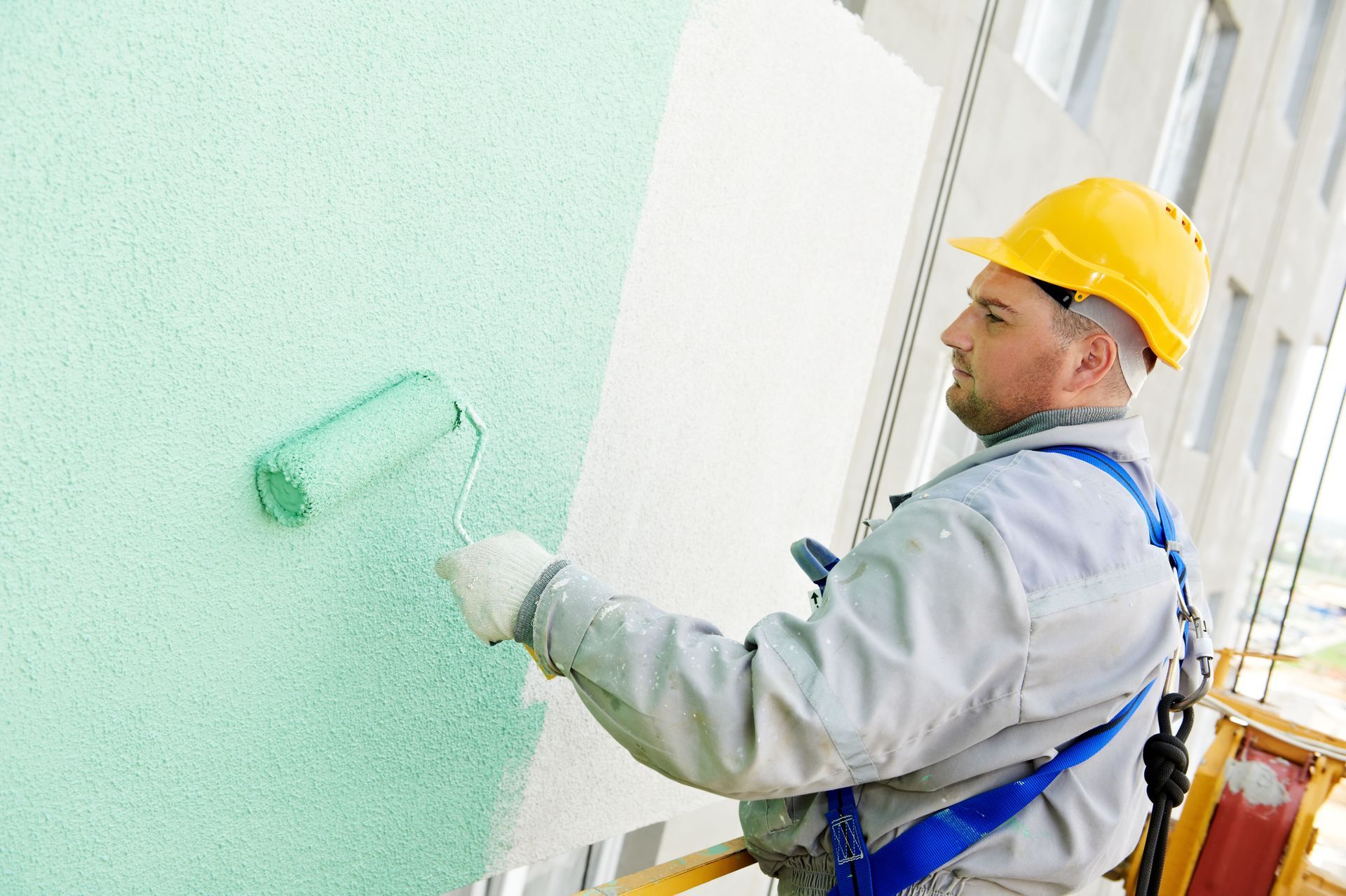
Safety footwear and headgear are mandatory components of industrial site PPE. Workers must wear steel-toed, slip-resistant boots to safeguard against dropped tools and slippery overspray accumulation. Industrial hard hats protect crews from overhead hazards and low-hanging infrastructure during active shifts.
Maintaining PPE Effectiveness
The ongoing efficacy of PPE rests on systematic inspection and maintenance routines. Developing mandatory daily checklists allows for the early detection of structural wear or material degradation. Workers should be empowered to report damaged safety gear immediately, ensuring swift replacements and uninterrupted protection.
Ensuring Proper Ventilation
Importance of Airflow
Adequate airflow is vital to dilute airborne toxins and preserve clean breathing air. For calculating necessary air exchange rates based on surface area coverage, remember that according to HomeGuide, a gallon of paint typically covers about 360 square feet of wall with one coat. Continuous air monitoring ensures these ventilation efforts effectively keep chemical concentrations well below hazardous thresholds.
Ventilation System Types
Industrial projects rely on both local exhaust ventilation and general dilution systems. Local exhaust systems capture toxic fumes directly at the spray source, preventing them from migrating across the facility. General dilution systems utilize high-powered axial fans to replace contaminated interior air with fresh outdoor air.
Installation Best Practices
Properly placing ventilation ducting requires strategic engineering to prevent dangerous dead-air pockets. Intake and exhaust vents must be positioned carefully to avoid recycling contaminated air back into the building. Crews must be thoroughly trained in configuring these temporary air systems safely.
Monitoring Air Quality
Accurate air quality monitoring enables teams to detect invisible hazards before symptoms manifest. Real-time gas detectors provide immediate warnings if VOC limits are breached. To balance coverage data, painters observe that, according to HomeGuide, a gallon of paint typically covers about 360 square feet of wall with one coat.
Successfully executing an interior industrial painting project requires an uncompromising, multi-layered commitment to comprehensive safety protocols, rigorous personal protective equipment management, and continuous environmental monitoring. Prioritizing worker health not only ensures strict regulatory compliance with complex federal and state standards, but it also directly elevates the operational quality, speed, and long-term efficiency of the entire coating application process. Sometimes absolute quiet focus, steady hands, and meticulous preparation speak much louder than flashy warning signs or generic words printed on a safety poster. Taking the time to properly calculate spatial dimensions, manage chemical inventories, and establish mechanical extraction zones transforms a highly hazardous work environment into a secure, predictable, and highly productive job site.
When you are ready to partner with a commercial team that effortlessly blends top-tier industrial safety standards with pristine coating execution, look no further than the certified professionals at Peters Painting LLC to safeguard your workforce and completely transform your industrial facility.


Share On: